Chapter 1.0
Introduction
How WILS looks, reads and sounds. Short, flat and the same everywhere.
WILSWorld’s International
Landscape Standard
Landscape Standard
The full lock-up: WILS in Bold, the long form in Medium on two lines. Chapter 2.0 has the construction.
WWorld’s
IInternational
LLandscape
SStandard
The four letters and the four words.
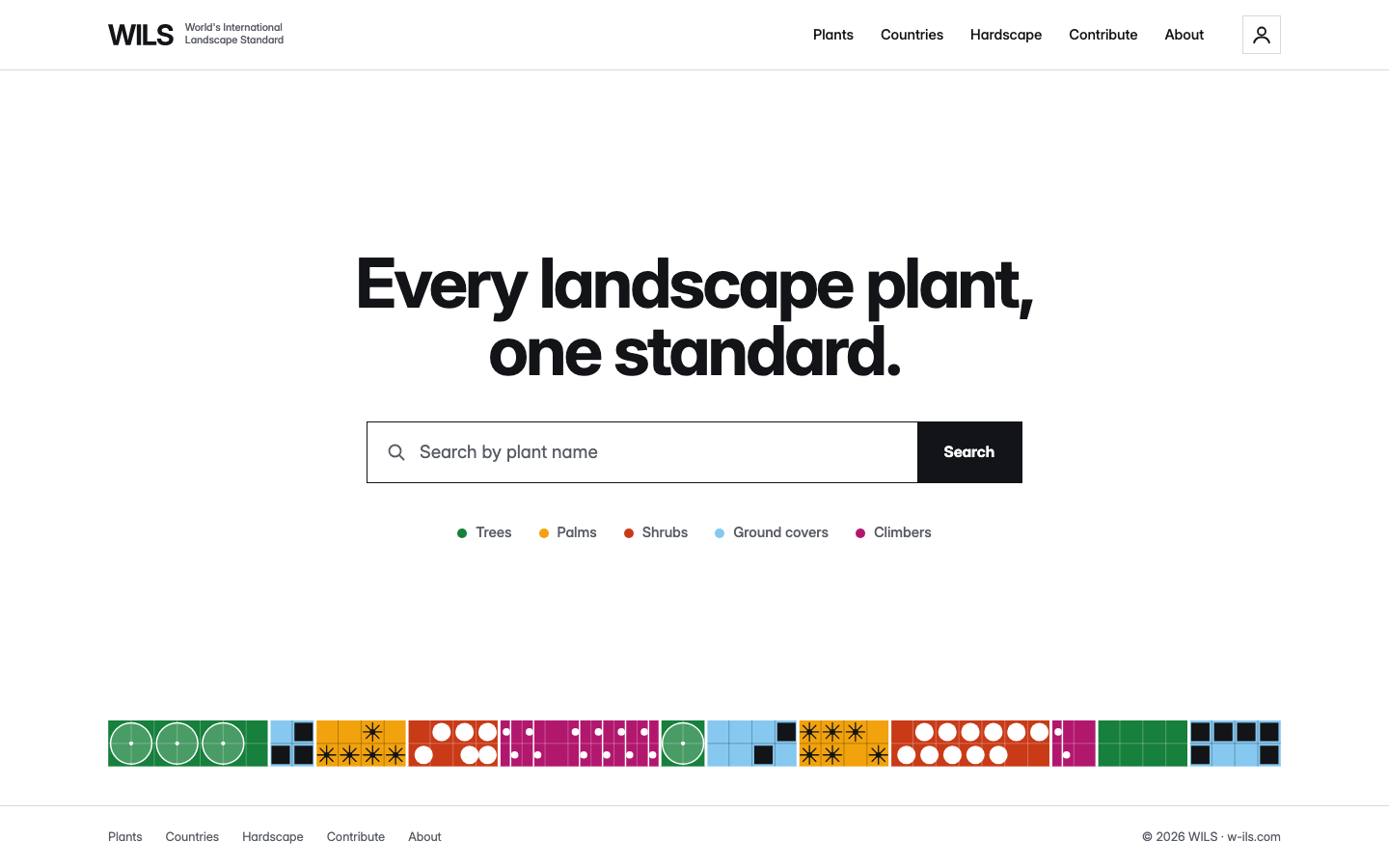
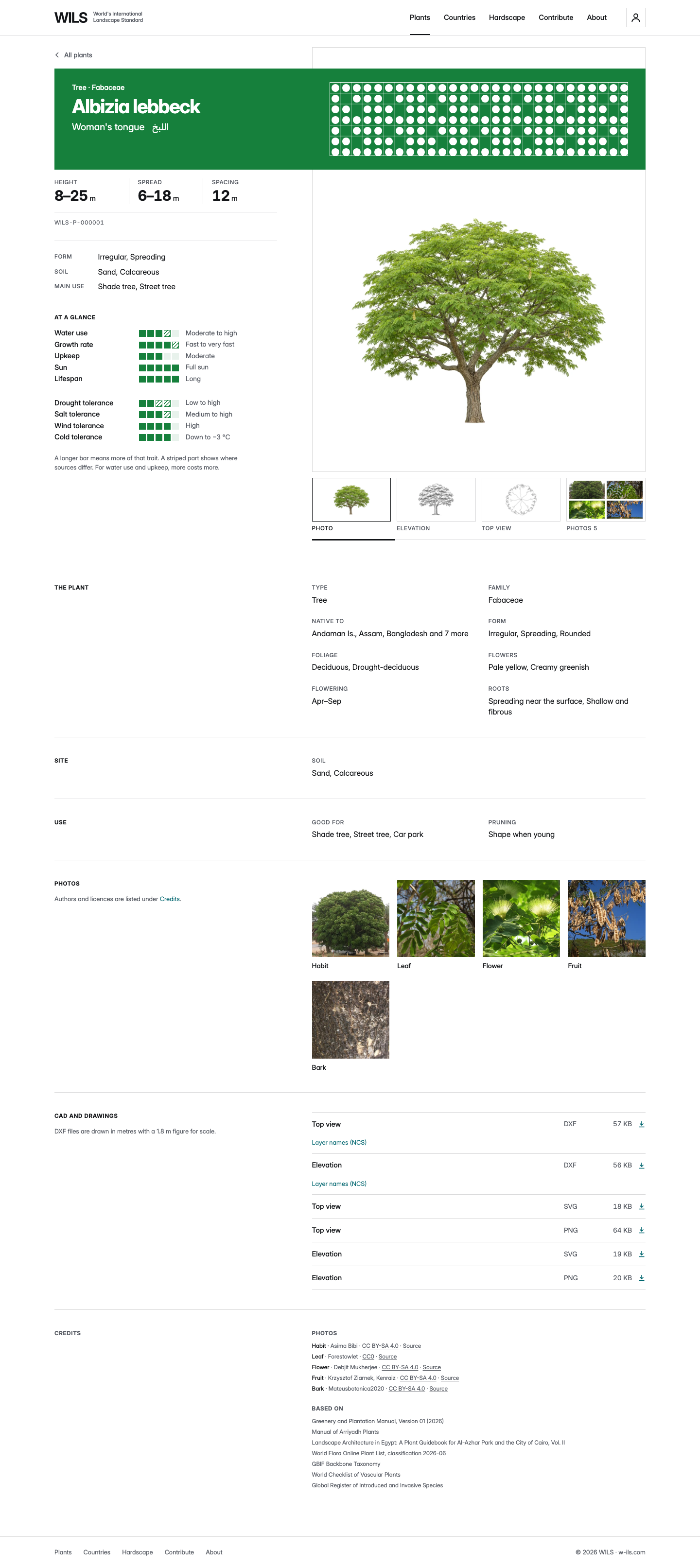
Two pages of the live website. Chapter 8.0 shows all of it.
-
FlatFlat colour. No gradients, no shadows.
-
round: this dot onlySquareSquare corners everywhere. Only the group dot is round.
-
Aa400 500 700One fontWILS Sans in three weights. Never italic.
-
Colour by groupFive plant groups and four hardscape groups each own a colour.
-
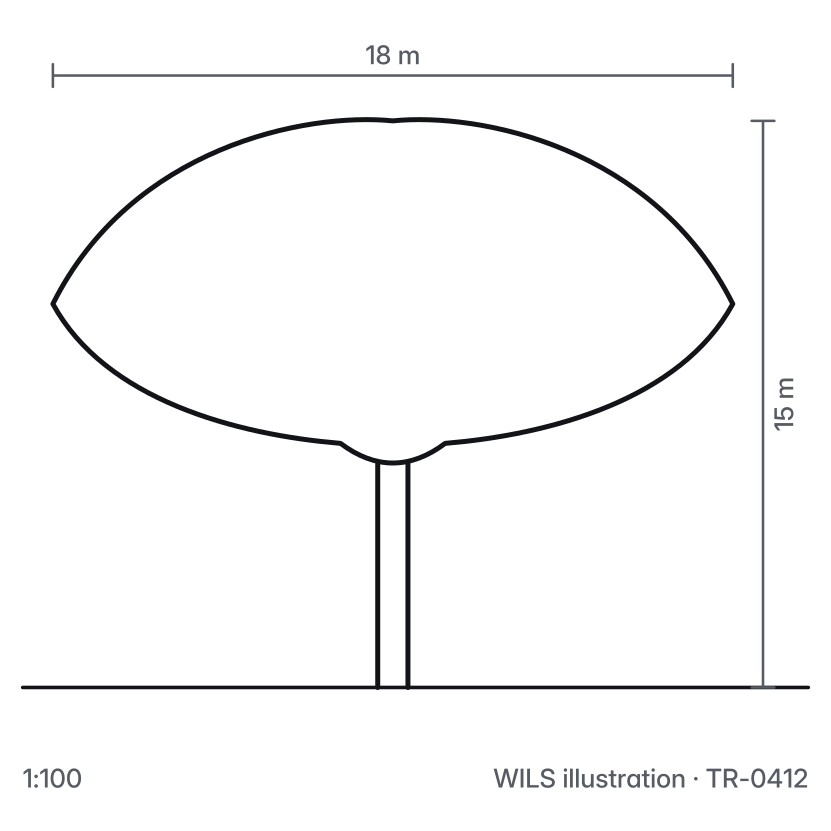 Drawings to one standardSame line weights, same scale, same figure for size.
-
Grows 15 to 20 m tall and 12 to 18 m wide.
Plain wordsShort sentences. Numbers with units. No jargon.
One specimen for each principle.
- 2.0LogoThe wordmark and the lock-up, clear space and sizes.
- 3.0ColourPaper, Ink, Delta Teal, the five plant groups and the four hardscape groups.
- 4.0TypographyWILS Sans, the type scale and numerals.
- 5.0Planting plan & patternsThe graphic made from the letters W, I, L, S, and the five patterns it is planted with.
- 6.0IllustrationThe four standard drawings of every plant.
- 7.0Layout & componentsGrid, spacing, rows, tiles and buttons.
- 8.0Website & applicationsHome, plant sheet, countries and the rest.
- 9.0Voice & rulesHow WILS writes, and the rules in one place.
- 10.0MotionOne moment per page, one ease, and when nothing moves.
- 11.0ResourcesDownloads: logo, tokens, fonts and drawings.
The coloured edge on each card is that chapter’s field colour.